Bernstein I
In 2005, the Bernstein Center Munich started out with eight Principal Investigators (theory groups: A. Borst, S. Glasauer, J.L. van Hemmen; experimental groups: A. Borst, T. Brandt, U. Büttner, B. Grothe; technical groups: G. Färber, W. Hemmert) that had teamed up to mainly carry out interdisciplinary tandem-projects with multiple interactions. Based on funding from the BMBF and long-term support by the Technical University Munich (TUM) and the Ludwig-Maximilians-Universität München (LUM) two new Faculty Positions were established that were filled with Werner Hemmert (TUM) and Christian Leibold (LMU).

By the end of the first five-year BMBF funding period, the Bernstein Center Munich had grown to 17 Principal Investigators at LMU, TUM, MPI and Infineon; in parallel, its scientific scope expanded greatly and numerous papers had been published. Therefore, the Center has been able to play a key role in establishing, shaping and supporting new closely related collaborative research and training centers – from basic neuroscience to technical application and towards clinical translation. This has resulted in a large and dense research network in the Munich area with a strong computational neuroscience component whose further development is supported by a second BMBF grant that is currently funding the Center as well as various sustainability measures of the host institutions.
Individual Projects
Electrical- and optical stimulation of neuronal networks
Principal Investigators: Hemmert
Neuroprosthesis depend on precise stimulation of neurons, both spatially and in the time domain. A new paradigm, optical stimulation with laser pulses, has the potential to achieve much higher spatial resolution compared to electrical stimulation, because light can be focused down to a spot ... more |

|
Memory capacity of dynamical cortical networks
Principal Investigators: Leibold
Recurrent neuronal networks are thought to serve as a physical basis for learning and memory. For example, the recurrent network in the CA3 region of hippocampus, exhibits the replay of stored sequences of previously experienced events. This replay is accompanied by the fieldpotential-pheno... more |

|
Motion Vision: Neural Mechanisms and Technical Applications
Principal Investigators: Borst, Buss, Kühnlenz
We study the neural mechanisms underlying visual course control in flies and its application in autonomously navigating robots and vision-based robot control. In the fly, ample evidence exists for a specific mechanism of local motion detection, the so-called Reichardt detector. In the curre ... more |
|
Multisensory Integration
Principal Investigators: van Hemmen, Luksch
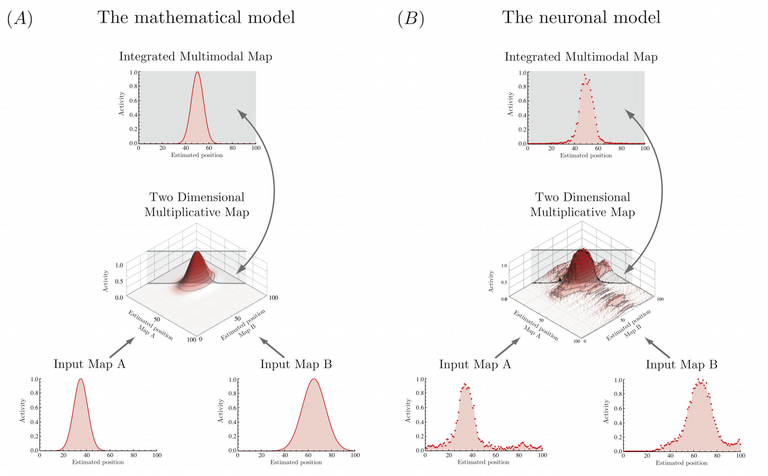
In the struggle for survival in a complex and dynamic environment, animals have developed a multitude of sensory systems. These sensory systems form the link between events in the real world and the neuronal representation of the very same events in the brain of ... more |
|
Neuronal Representations of Multiple Concurrent Sound Sources
Principal Investigators: Leibold, Grothe
We are regularly exposed to several concurrent sounds, producing a mixture of binaural cues. The neuronal mechanisms underlying the localization of concurrent sounds are, however, not well understood. The major binaural cues for localizing low-frequency sounds in the horizontal plane are int ... more |
|
Processing of Static and Dynamic Acoustic Cues in the Mammalian Auditory System
Principal Investigators: van Hemmen, Grothe
This projects aims at elucidating the computational principles underlying neuronal processing of static and dynamic acoustic cues. A major focus has been the problem of how our auditory system can reliably localize sound sources in a reverberant environment. In this context we successfully ... more |
|
Speech Processing in the Auditory PathwayOne of the most critical steps in encoding sound for neuronal processing occurs when the analog pressure wave is coded into discrete nerve-action potentials. Recent pool models of the inner hair cell synapse do not reproduce the dead time period after an intense stimulus, so we used visual ... more |

|
Temporal Information Processing in the Auditory SystemThe auditory system is an excellent model to study temporal aspects of information processing be-cause of the pronounced temporal structure of communication sounds. In our analysis of information transmission by neurons in the auditory brainstem we compared two neuron types: octopus neurons ... more |

|
Temporal Patterns of Spike Activity underlying Smooth Pursuit Control
Principal Investigators: Glasauer
Gain modulation is a major computational principle of sensorimotor transformations. Changes in the sensory environment or variations of the internal state demand an adaptive reweighting of sensory inputs. Smooth pursuit eye movements exhibit a dynamic gain control, resulting in an increased ... more |
|
Vestibular Signals during Active and Passive Head Movements
Principal Investigators: Glasauer
Active and passive head movements both generate sensory signals in the vestibular system, yet require completely different reactions to this input. Here we investigate the context-dependent processing of vestibular signals with a variety of methods. To clarify the role of vestibular sensory ... more |

|
Visual-Vestibular Fusion for Spatiotemporal Memory and Navigation
Principal Investigators: Glasauer
We are interested in the basic mechanisms and principles of human navigation. ... more |
Advisory Board
- Prof. Dr. Henry Abarbanel, University of California, San Diego, USA
- Prof. Dr. Sten Grillner, Karolinska Institute, Stockholm, Sweden
- Prof. Dr. Klaus-Peter Hoffmann, Ruhr-University, Bochum, Germany
- Prof. Dr. Mayank R. Mehta, University of California, Los Angeles, USA
- Prof. Dr. Israel Nelken, Hebrew University, Jerusalem, Israel
- Prof. Dr. Anthony Zador, Cold Spring Harbor, New York, USA